“I only want what’s best for you.”
If you’re a parent, you’ve probably said those words.
If you’re a young adult, you’ve probably heard them.
The heartbreaking thing is… both people usually mean well.
One is trying to protect.
The other is trying to breathe.
And somewhere in the middle, the relationship starts to crack.
To the Parent
Can I ask you a difficult question?
What if your child obeys you… but never learns to trust themselves?
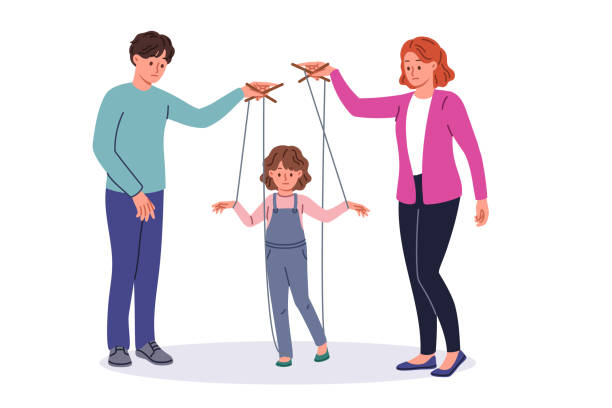
Many parents, especially those of us raised in strict households, equate control with good parenting.
We think:
“If I don’t stay on top of everything, they’ll make poor decisions.”
“If I give them too much freedom, they’ll lose their way.”
“I know better because I’ve lived longer.”
The intention is usually love.
But intention doesn’t always equal impact.
Control often starts innocently.
Checking where they’re going.
Wanting to know who they’re with.
Making decisions because “it’s quicker”.
Expecting obedience because “I’m the parent.”
Over time, those little moments can quietly send another message:
“I don’t trust you.”
Children don’t just need protection.
They need opportunities to practise making decisions while you’re still there to guide them.
Because one day you won’t be.
Parenting isn’t about raising obedient children.
It’s about raising capable adults.
And capable adults aren’t created by making every decision for them.
They’re created by helping them make increasingly better decisions for themselves.
To the Young Adult
Living with controlling parents can feel exhausting.
You feel like you’re old enough to make your own choices…
Yet every decision still feels like it needs approval.
You might be in your twenties.
You might have a degree.
You might even have a full-time job.
But somehow you’re still asking permission to go on holiday.
Or worrying about what time you need to be home.
Or wondering whether telling them the truth is even worth the argument.
That creates a strange conflict.
You love your parents.
You appreciate what they’ve sacrificed.
But you also feel trapped.
If that’s you, hear this:
Your frustration is understandable.
But remember this too…
Your parents’ control is often rooted in fear, not cruelty.
Fear that you’ll get hurt.
Fear that you’ll make mistakes.
Fear that the world will take advantage of you.
Fear of losing the little boy or little girl they’ve spent years protecting.
Understanding that doesn’t make the control okay.
But it can help you approach the conversation differently.
The Hidden Cost of Too Much Control
Whether you’re 15 or 25, growing up under constant control can leave invisible scars.
Some people begin doubting every decision they make.
Others become people-pleasers because they’ve learned their opinions don’t matter.
Some struggle to set boundaries.
Some rebel dramatically.
Others become anxious whenever they’re faced with making independent choices.
Ironically, the very thing parents hope to prevent can become more likely.
Children who never practise making decisions often struggle when they’re finally forced to make them alone.
The Goal Was Never Control
Think about teaching a child to ride a bike.
At first you hold the seat.
Then you loosen your grip.
Eventually…
You let go.
Imagine holding onto that bike forever.
The child never falls.
But they never learn to balance either.
That’s what over-controlling parenting can become.
Keeping hold feels safe.
Until you realise your child has never had the chance to ride on their own.
So What Does Healthy Parenting Look Like?
Healthy parenting isn’t the absence of boundaries.
Children need boundaries.
Teenagers need boundaries.
Young adults living at home should still respect house rules.
But healthy boundaries sound different from control.
Instead of:
“Because I said so.”
Try:
“Help me understand your thinking.”
Instead of making every decision…
Coach them through the decision.
Instead of demanding obedience…
Build enough trust that they seek your wisdom voluntarily.
The goal is to move from manager to mentor.
From controller to coach.
If You’re the Parent…
Ask yourself:
-
Am I protecting my child, or protecting my own anxiety?
-
Am I teaching decision-making, or making every decision?
-
Does my child obey me because they trust me… or because they’re afraid of disappointing me?
-
If they left home tomorrow, would they know how to navigate life without me?
If You’re the Young Adult…
Ask yourself:
-
Have I calmly explained how the control affects me?
-
Am I consistently showing responsibility, or only asking for freedom?
-
Can I have conversations instead of arguments?
-
Am I building enough independence financially and emotionally to eventually stand on my own?
One Final Thought
To every parent reading this:
Your child doesn’t need a perfect parent.
They need a safe place to grow.
And growth requires room.
To every young adult reading this:
Your parents may never fully understand your frustration overnight.
But healthy independence isn’t something you demand.
It’s something you gradually demonstrate.
The strongest families aren’t built on fear.
They’re built on trust.
Because the ultimate measure of parenting isn’t whether your child follows your instructions while they’re living under your roof.
It’s whether they still choose to come back to you for wisdom long after they’ve left it.