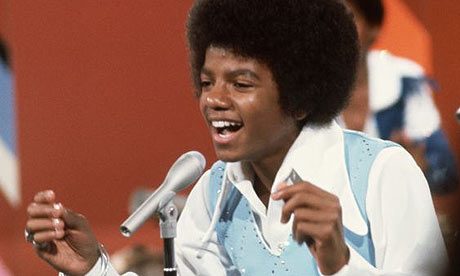
I watched a documentary about Michael Jackson recently.
Like many people, I’ve also watched documentaries about athletes such as Rafael Nadal and the Williams sisters. Different industries. Different families. Different journeys.
Yet one theme kept emerging.
Greatness often comes with a cost.
Not just for the individual who achieves it, but often for the child who must become that individual.
As a parenting coach, I found myself reflecting on a question that feels both uncomfortable and important:
What if the very things that help create extraordinary success can sometimes come at the expense of childhood?
The Making of Michael Jackson
There is no denying Michael Jackson’s talent.
From a young age, he displayed an exceptional gift for performance. His work ethic was legendary. His attention to detail was extraordinary. His impact on music and entertainment remains almost unmatched.
But Michael’s story is about more than talent.
It is also a story about pressure, expectations, discipline, and sacrifice.
By many accounts, his childhood looked very different from that of most children. While others were playing in parks, attending birthday parties, or simply enjoying the freedom that childhood often brings, Michael was rehearsing, touring, performing, and striving for perfection.
The Jackson family achieved something remarkable.
The world benefited from their success.
But Michael himself would later speak openly about feeling as though he had missed out on a normal childhood.
And that is where his story becomes relevant to every parent.
Not because most of us are raising future global superstars.
But because many of us are trying to help our children reach their full potential.
The Parenting Dilemma Nobody Talks About
Most parents want the best for their children.
We encourage them to work hard.
We teach discipline.
We help them develop resilience.
We invest time, money, and energy into helping them succeed.
There is nothing wrong with that.
In fact, children often need challenge and structure to discover what they are capable of.
The problem arises when achievement becomes the primary measure of a child’s value.
When success becomes more important than well-being.
When performance becomes more important than connection.
When a child begins to believe:
“I am loved when I achieve.”
“I am valued when I perform.”
“I matter when I succeed.”
That is a heavy burden for any child to carry.
Excellence Is Not the Enemy
This is not an argument against ambition.
Far from it.
I admire excellence.
I admire dedication.
I admire children who commit themselves to developing their gifts.
Some of the greatest athletes, musicians, entrepreneurs, and leaders in the world reached their level because someone believed in them enough to challenge them.
The issue is not excellence.
The issue is the environment in which excellence is pursued.
A child can be challenged while still feeling emotionally safe.
A child can strive for greatness while still knowing they are loved regardless of results.
A child can work hard without carrying the fear that failure will cost them acceptance.
The healthiest high achievers are often not the ones who never fail.
They are the ones who know failure does not define them.
Success Without Sacrifice
One of the biggest lessons Michael Jackson’s story teaches us is that success and well-being should not be treated as opposing goals.
Too often, parents feel they must choose between raising happy children and raising successful children.
That is a false choice.
The goal is not to raise children who avoid challenges.
Nor is it to raise children who sacrifice themselves in pursuit of achievement.
The goal is to help children develop the skills, confidence, and character to pursue excellence without losing themselves along the way.
That means:
- Valuing effort more than outcomes.
- Prioritising connection before correction.
- Celebrating character as much as achievement.
- Allowing children space to play, explore, and simply be children.
- Reminding them regularly that their worth is not attached to their performance.
Because one day the trophies will gather dust.
The certificates will be packed away.
The applause will fade.
What remains is the person.
The Question Every Parent Should Ask
Could Michael Jackson have become Michael Jackson without the pressure he experienced?
We can never know.
But perhaps that is the wrong question.
A better question might be
Can we help our children pursue greatness without making them believe their value depends on being great?
That is the challenge facing modern parents.
Not choosing between success and happiness.
Not choosing between ambition and well-being.
But finding a way to nurture both.
Because the ultimate goal of parenting is not simply to raise successful children.
It is to raise healthy adults.
Adults who can achieve without feeling they must constantly prove themselves.
Adults who can perform without fearing they will lose love if they fail.
Adults who know that who they are matters far more than what they accomplish.
And that may be the greatest gift a parent can give.